
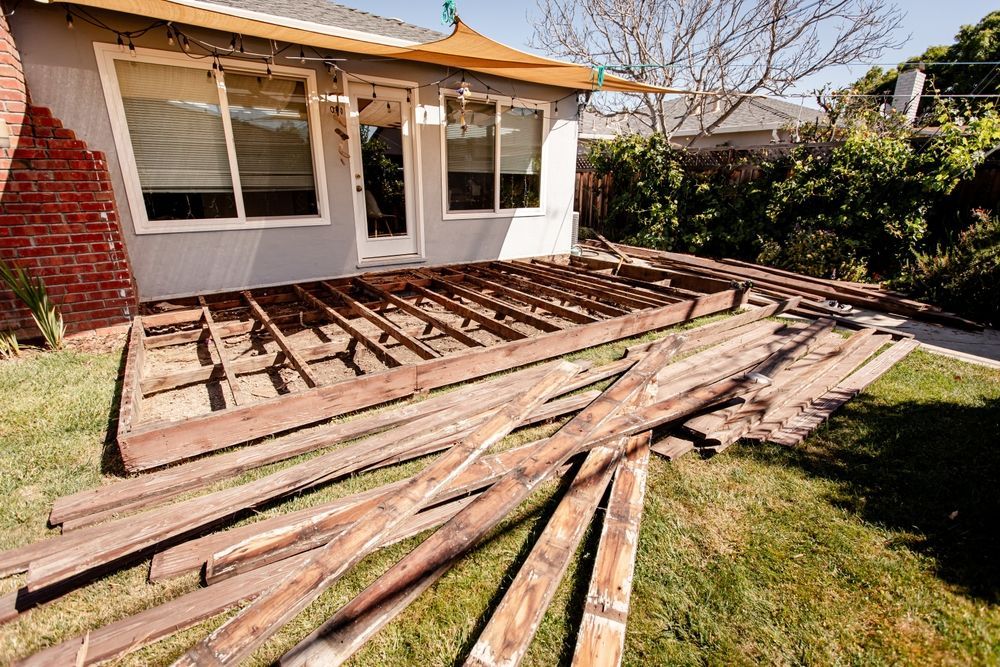
Structural Problems Caught Before They Worsen
Deck and Porch Repairs in Siler City for structures with loose boards, deteriorating framing, or components that no longer function safely
Boards that flex when walked on, railings that shift when gripped, and posts showing visible rot at the base are all signs that a deck or porch has moved past normal aging into territory that needs attention. Ferguson's Handyman Service evaluates existing structures in Siler City, Chapel Hill, Graham, or a surrounding area, and identifies which components need replacement versus reinforcement. The difference between a surface repair and a structural repair becomes clear once framing is inspected—what looks like a board problem at the surface often points to joist or ledger issues underneath.
Deck and porch repairs typically start with assessing the condition of posts, beams, joists, ledger connections, and decking boards in sequence. In Siler City's humid climate, wood near grade or at water collection points deteriorates faster than elevated sections, so inspection focuses on areas where moisture contact is most consistent. Fasteners that have corroded lose their holding strength before surface rust appears, which is why probing around fastener locations matters during a thorough evaluation.
Request an evaluation from Ferguson's Handyman Service to identify what the structure needs before the next outdoor season.
How Repairs Address Structural Deterioration
Repairs work from the structure outward—framing and connection points get addressed before surface components, because replacing boards over a compromised joist simply repeats the problem. Sistering damaged joists, replacing rotted posts, and re-securing ledger connections are all work that happens below the deck surface but determines how the finished repair holds up.
Once repairs are complete, the deck should sit level without flex points, railings should be firm in all directions, and the structure should handle normal use without movement. Areas that were previously avoided due to soft spots or instability become fully usable again, and the visual difference between repaired and original sections narrows as materials weather to a similar appearance.
Some repairs also create an opportunity to evaluate whether original construction details were adequate. Post base hardware, ledger flashing, and beam-to-post connections are all worth inspecting during any significant repair project—correcting a marginal detail during active repair work costs far less than addressing a failure later.
Common Questions About Deck Repair Work
Deck and porch repair questions often center on what's causing the problem versus what's visible at the surface. Here are the situations that come up most often.
How do I know if my deck needs structural repair or just surface work?
If boards feel soft or flex significantly when walked on, the issue often extends to the joists or framing below—surface board replacement alone won't resolve a structural problem.
What causes deck posts to fail at the base?
Posts in direct soil contact or inside post bases that collect standing water deteriorate at the base first; in Siler City's wet seasons, posts without proper drainage clearance fail years earlier than those kept dry.
When should a deck be replaced rather than repaired?
When framing members are compromised across a large portion of the structure, or when ledger connections have failed in ways that affect attachment to the house, replacement may be more practical than piecemeal repair.
Why do railings loosen over time?
Post bases that weren't properly anchored, balusters attached with fasteners that have corroded, and rail connections that relied on friction rather than hardware all contribute to railing movement.
How are repairs prioritized when multiple components need work?
Structural components—posts, beams, joists, and ledger connections—are addressed first, followed by decking boards, then railing and finish details.
Connect with Ferguson's Handyman Service to schedule a full structural walkthrough and determine what work the
deck or porch actually requires.