
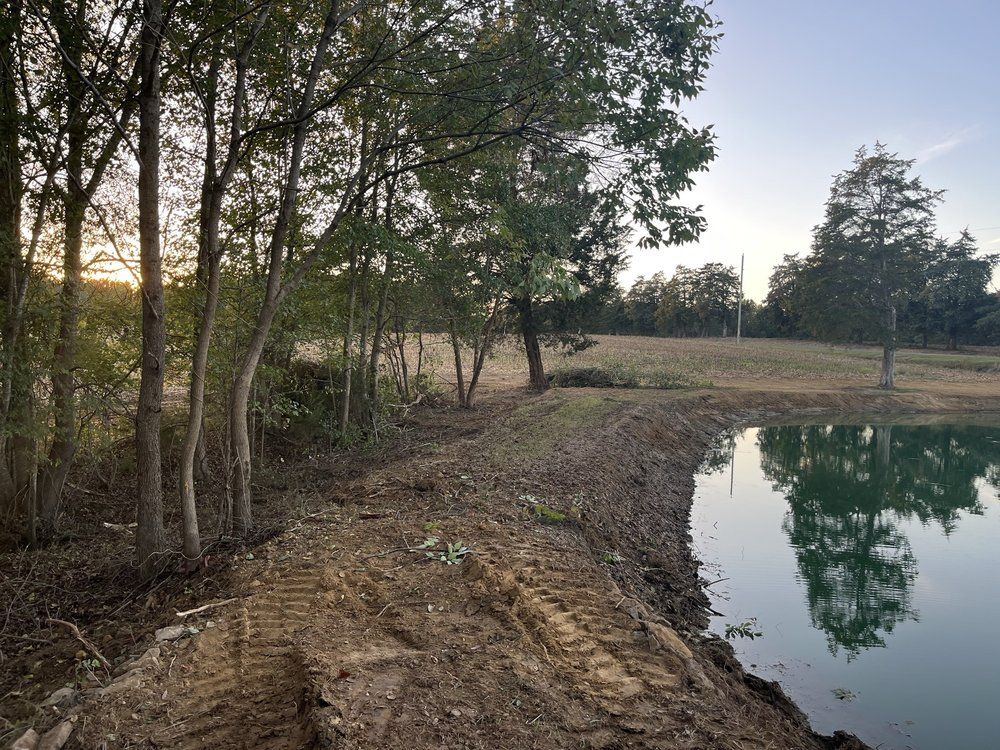
Overgrown Property Cleared for Productive Use
Land Clearing in Siler City for property owners preparing undeveloped or overgrown areas for construction, landscaping, or access improvements
Undeveloped land in Siler City, Sanford, Asheboro, and neighboring communities often carry years of unchecked vegetation growth—established trees, dense brush, root systems, and debris that make the ground impractical for construction or improvement without deliberate clearing work. Ferguson's Handyman Service evaluates overgrown and undeveloped parcels and determines the appropriate clearing scope based on what's growing, how dense it is, and what the property owner intends to do with the area once vegetation is removed. Site conditions and end goals together define what the clearing phase actually involves.
Land clearing is assessed in stages: what needs to be removed, what should stay, and what the terrain looks like once the vegetation is gone. Root removal, stump grinding, and grading considerations enter the picture depending on what's growing and how deep root systems run. Properties with a mix of mature trees and dense underbrush require different equipment and a different work sequence than lots covered primarily in scrub growth and small-diameter trees.
Request a site evaluation from Ferguson's Handyman Service to assess what clearing your property requires and what the site will be ready for once work is complete.
What Land Clearing Prevents Long-Term
Clearing overgrown land removes vegetation that, left in place, continues to advance on usable area—invasive species in particular can reclaim cleared ground quickly if root systems aren't properly addressed during the initial work. The clearing process also removes organic material that, when buried during subsequent grading, can create soft spots and settling issues in areas intended for construction. Addressing that material during clearing avoids problems that would otherwise surface later in the project sequence.
After clearing is complete, the property shows defined, usable ground where dense vegetation blocked visibility and access before. The cleared area can then be evaluated for grade, drainage patterns, and soil conditions that weren't observable through the growth—information that's often essential for planning whatever comes next. What you're left with is a workable site rather than a parcel that exists on paper but can't be practically assessed or put to use.
Debris management is part of the clearing conversation from the beginning. Material can be chipped and redistributed, piled for later removal, or hauled off the property depending on volume, access, and project requirements. Establishing that plan before work begins affects both the timeline and the equipment brought to the site.
Questions Before Starting Your Clearing Project
Land clearing questions often come down to what the process involves for a specific site and what the property will be ready for once work is done. Every parcel is different, and the answers depend on what's growing and what comes next.
How is the scope of land clearing determined before work begins?
Scope is based on a site evaluation that accounts for vegetation type, density, terrain, access, and what the property needs to look like once clearing is complete.
What happens to stumps and root systems after trees are removed?
Stumps can be ground down below grade or removed entirely depending on what the cleared area will be used for—construction sites typically require full stump removal to prevent settling under any future surface.
Why does vegetation type affect the clearing approach?
Mature hardwoods, dense brush, and invasive species each require different equipment and removal methods; in Siler City's terrain, a mixed lot often involves multiple clearing approaches within the same project.
When is the best time to clear land?
Clearing during dry periods reduces equipment impact on soil and makes debris management more practical; site access and ground conditions vary significantly by season.
What should the cleared area look like after work is finished?
The finished site shows exposed ground with stumps addressed to the agreed specification, debris managed per the project plan, and natural terrain grade visible without overgrowth obscuring it.
Ferguson's Handyman Service can walk your property, assess the vegetation and terrain, and outline what a clearing project would involve for your specific site and intended use.